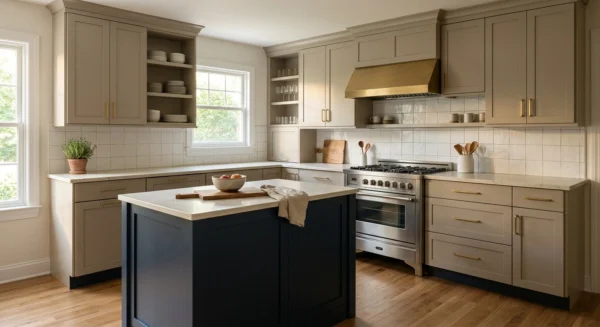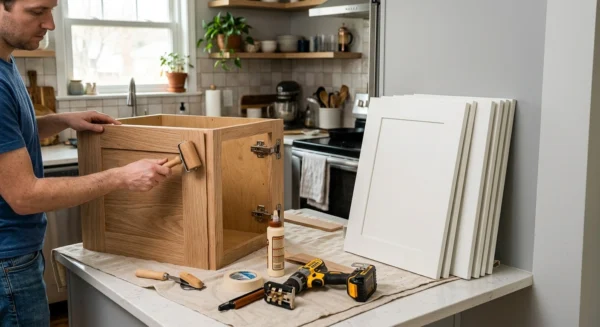
Eco-friendly Cabinet Trends now follow a practical hierarchy: preserve sound cabinets, choose durable low-emitting replacements, and avoid short-lived finishes. For many homeowners, refacing or repainting sturdy cabinet boxes creates the least waste. Both approaches preserve material that is already in the house.
If the layout or boxes cannot be saved, focus on construction quality rather than a single “green” feature. Well-built plywood cabinets can last for decades when they include certified wood, replaceable hardware, and a durable low-emitting finish. The most sustainable cabinet is one that remains useful and presentable for years.
Look beyond door color and inspect how the cabinetmaker joins the box. Ask what binds the panels, whether suppliers stock replacement hinges, and whether you can refinish damaged parts. Each material involves tradeoffs. Solid wood moves with humidity, MDF swells after soaking, and imported bamboo may not outperform responsibly sourced domestic hardwood.
Efficient storage also reduces material use. A well-planned pantry or drawer base may remove the need for another cabinet. These practical choices matter more than a recycling symbol attached to a conventional, short-lived product.
What Today’s Eco-friendly Cabinet Trends Get Right
Reuse has become the strongest sustainable cabinet trend. Sound boxes can often accept new doors, drawer fronts, hinges, hardware, and finished end panels. This work may leave the countertop and flooring undisturbed.
Reuse works well when the boxes remain square, dry, firmly mounted, and structurally sound. Plywood and solid lumber boxes usually make good candidates. However, replacement often makes more sense when particleboard has swollen, cabinet bottoms sag, or a new layout requires moving every opening.
Material transparency also helps buyers make better decisions. Ask whether the manufacturer uses certified wood and compliant composite panels. You should also request the name and technical data for the finish.
In the United States, composite wood in cabinetry must comply with the EPA’s TSCA Title VI formaldehyde standards. Manufacturers also commonly list CARB Phase 2 compliance because California helped shape the national market. Compliance allows a panel’s intended use, but it does not mean the panel produces zero emissions.
For a more cautious specification, request documentation for no-added-formaldehyde or ultra-low-emitting-formaldehyde panels. Do not accept a vague “non-toxic” claim without supporting information.
Comparing Sustainable Cabinet Options
The right choice depends on the existing layout and the condition of the cabinet boxes. The following 2026 planning ranges reflect typical U.S. contractor and cabinet-shop pricing. They are not fixed bids or national averages.
These estimates generally exclude countertops, appliances, flooring, major electrical work, and plumbing relocation. Labor rates, door style, wood species, hardware, freight, finish, and site access can change the final quote.
Refacing usually requires the least new material. However, premium doors and professional finishing can raise its price. Stock cabinets cost less, but limited sizing may create fillers and unusable gaps.
Semi-custom cabinetry often provides a useful middle ground. Additional widths, altered depths, and better storage fittings can improve the layout without requiring a full custom build. Custom cabinets make sense when they solve difficult dimensions or support future repair.
| Option | 2026 U.S. planning cost | Typical timeline | Disruption | Likely service life | What changes |
|---|---|---|---|---|---|
| Paint existing cabinets | About $40–$100 per door or drawer front for professional shop-style finishing; DIY materials cost less | Several workdays plus curing time | Moderate; workers remove doors and mask the kitchen | Often 5–15 years before major touch-ups, depending on preparation and use | Finish and usually hardware |
| Reface sound boxes | About $100–$450 per linear foot installed | About one to two weeks after door production | Low to moderate | Often 15–25 years with sound boxes, durable veneer, quality doors, and reliable hinges | Doors, drawer fronts, exposed box surfaces, and often hinges |
| Install new stock cabinets | About $150–$500 per linear foot installed | Several weeks, including ordering and installation | High; installers remove old cabinets and usually the counters | About 10–20 years, with wide variation in box and hardware quality | The entire cabinet run |
| Install new semi-custom cabinets | About $300–$900 per linear foot installed | Several weeks to a few months | High | Often 20–30 years with quality boxes and replaceable hardware | The entire run, with some layout changes |
| Install new custom cabinets | About $700–$1,500 or more per linear foot installed | Usually several months from design through installation | High | Several decades with proper construction, installation, and maintenance | Anything from one cabinet to the complete layout |
Reuse Cabinet Boxes Before Buying New Ones
Inspect the cabinet boxes before judging them by dated doors. Remove a drawer and examine the box corners, sink base, toe kicks, shelf-pin holes, and hinge areas. Plywood with intact veneers and solid joinery usually accepts refacing well.
Dry particleboard can also remain serviceable when its fasteners still hold. Crumbling screw holes and swollen edges, however, rarely support a reliable repair.
Measure the cabinet run for square and inspect the face frames for separation. A rocking cabinet or settled countertop may point to an installation problem rather than cosmetic wear. Refacing will not correct an inaccessible blind corner, narrow aisle, or inefficient refrigerator location.
Refacing also cannot restore badly damaged boxes. Replacement makes more sense when preservation would require extensive patches and added material.
Painting Versus Refacing
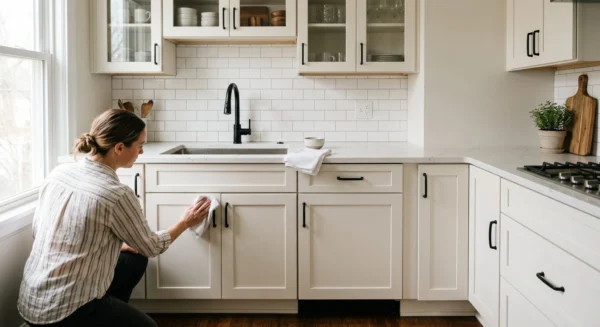
Painting preserves the most existing material, but preparation determines the finish’s durability. Remove grease with a cabinet-safe degreaser, such as Krud Kutter Original Cleaner/Degreaser, or use a diluted trisodium-phosphate substitute. Follow the label and complete any required clean-water wipe.
Next, degloss or sand glossy surfaces before applying a bonding primer. Finish with a cabinet-rated topcoat. Contractors often use waterborne products such as Benjamin Moore INSL-X Cabinet Coat or Sherwin-Williams Emerald Urethane Trim Enamel.
Refacing replaces the doors and drawer fronts. Installers also cover exposed face frames and end surfaces with matching veneer or finished panels. Many projects include new concealed hinges.
Refacing costs more than basic painting, but it allows a true change in door style. Neither method can fix water-damaged substrates or poor cabinet placement. Waterborne coatings may feel dry quickly, yet some need up to 30 days to cure fully.
Safety When Disturbing Existing Cabinet Finishes
Cabinets in homes built before 1978 may contain lead paint under newer coatings. Test the finish before sanding, scraping, drilling, or heat stripping. These activities can release hazardous lead dust.
A paid contractor working on painted surfaces in a pre-1978 home may fall under the EPA Renovation, Repair and Painting Rule. Ask about certification, containment, and cleanup procedures. Never treat an uncertain coating as ordinary sanding dust.
For sanding, use ventilation and a properly fitted N95 respirator. A loose dust mask does not offer equivalent protection. Solvent finishes and chemical strippers require ventilation and an appropriate organic-vapor cartridge respirator.
Choose respiratory protection according to the product label and safety data sheet. Do not use methylene chloride paint strippers because federal rules ban consumer sales. If stripping remains necessary, consider a safer product such as a benzyl-alcohol-based stripper.
Shut off power and water before working near outlets, switches, plumbing lines, or appliances. Hire licensed professionals for new electrical, gas, and plumbing connections.
Choose Durable, Low-Emitting Cabinet Materials
Cabinet-grade plywood works well for boxes because its cross-laminated veneers resist seasonal movement. It also holds screws well. Look for flat panels, sealed plumbing edges, and a reasonably thick face veneer.
Ask for adhesive documentation instead of relying on the word “plywood.” Particleboard uses wood particles bonded under pressure, so it differs from plywood. It generally provides less edge-screw strength and moisture resistance.
High-quality particleboard can still produce straight, stable cabinet panels. However, an unsealed edge in a sink base can swell after a leak.
MDF creates smooth painted doors and accepts routed profiles well. Water remains its main weakness. Once MDF swells, drying will not return it to its original thickness.
Specify sealed edges and avoid ordinary MDF in areas that face repeated wetting. For painted slab doors, ask how the maker prevents warping. Large unsupported panels can move even when the surface appears flat.
FSC-Certified and Reclaimed Wood
Forest Stewardship Council certification tracks wood through the FSC chain-of-custody system. Certification does not guarantee durable construction, local sourcing, or low emissions. Pair certified wood with strong joinery and a suitable finish.
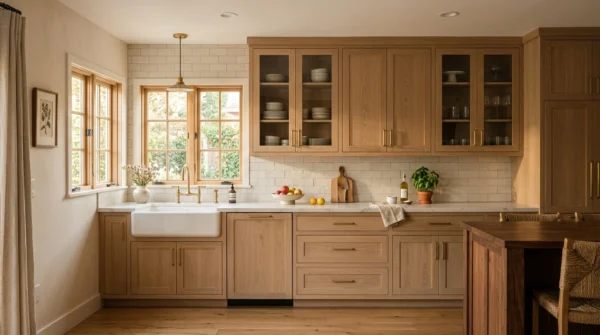
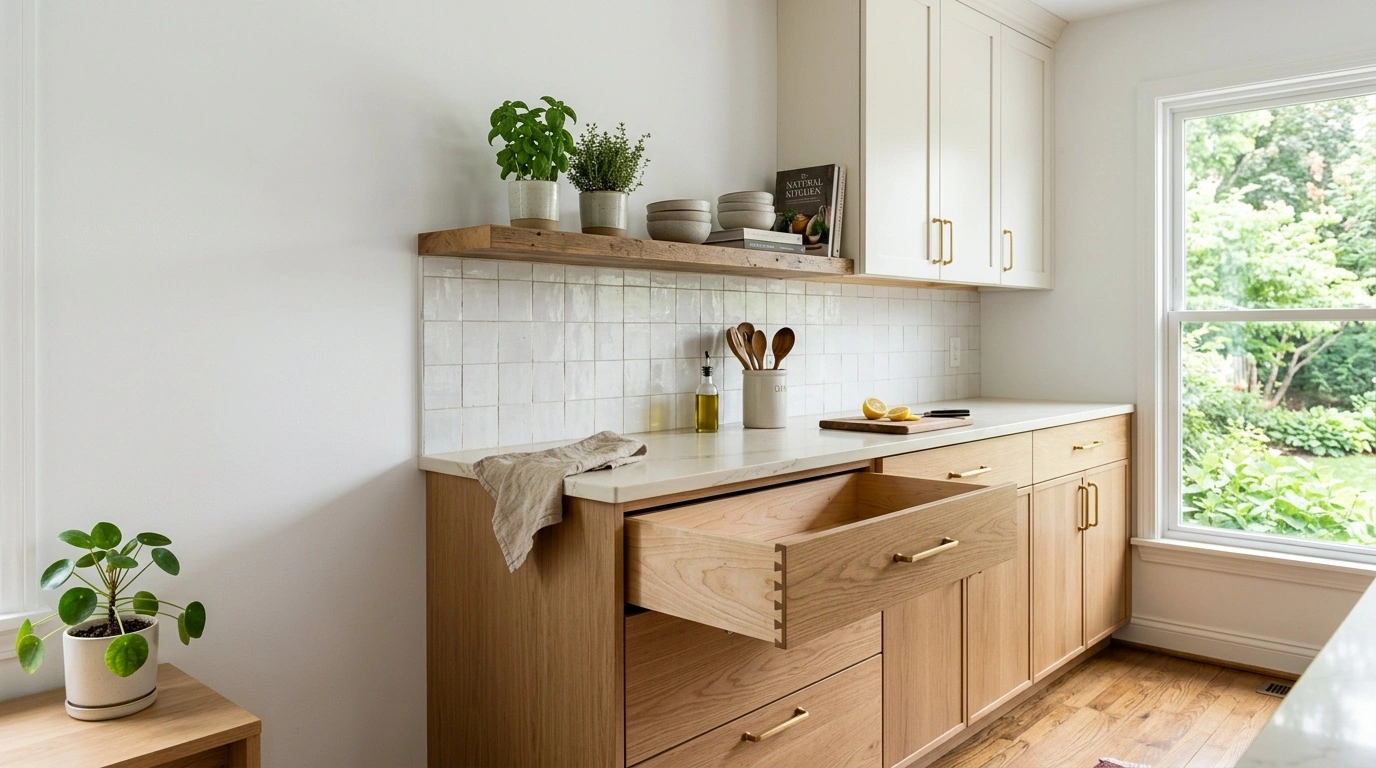
Responsibly sourced maple, cherry, white oak, and walnut all work well for cabinets. White oak remains popular because its open grain suits clear finishes and light stains. It also works with Shaker and flat-panel doors.
Reclaimed lumber can reduce demand for newly harvested decorative wood. It also gives doors, shelves, and panels an aged surface. However, old boards may contain metal, insect damage, unstable sections, or unknown finishes.
A capable shop will scan reclaimed lumber for metal, check its moisture, and remove weak areas. Reclaimed material often works better as an accent than as every cabinet component. Good uses include island panels, open shelves, and selected doors.
Bamboo and Other Rapidly Renewable Materials
Bamboo panels can create durable doors and drawer fronts with a strong linear grain. The plant grows quickly, but the finished panel still depends on adhesives and factory practices. Shipping distance and service life also affect its environmental value.
Request formaldehyde-emission documentation and a sample of the actual panel. Inspect both its face and edge construction. Thin bamboo veneer over a weak substrate does not equal a well-made laminated panel.
Bamboo’s striped pattern can dominate a kitchen when it covers every upper and base cabinet. Plain counters, simple pulls, and restrained tile usually provide better visual balance. Repairs can also prove difficult because the laminated pattern does not patch like hardwood.
Treat bamboo as a specific engineered material rather than an automatic environmental improvement.
Select Low-VOC and Repairable Cabinet Finishes
Waterborne cabinet coatings now provide a practical alternative to many solvent-heavy products. A low-VOC rating can reduce solvent exposure during application. Even so, workers still need ventilation, gloves, eye protection, and careful label compliance.
Factory finishing usually offers better dust control and more consistent film thickness. It also keeps much of the finishing work out of an occupied kitchen. However, some factory coatings make invisible spot repairs difficult.
Ask the cabinetmaker how to repair scratches and chipped edges. Also request touch-up materials with the finished order.
Clear waterborne finishes preserve the pale color of maple and white oak better than many oil-based varnishes. Oil-based products usually add warmth and may amber further with age.
Hardwax oils such as Rubio Monocoat Oil Plus 2C and Osmo Polyx-Oil create a natural appearance. Owners can often repair small areas locally. However, these finishes require maintenance and may resist household chemicals less effectively than robust cabinet coatings.
Oil-soaked rags can self-heat and catch fire. This hazard applies to linseed, tung, Danish, and similar oil-based finishes. Spread used rags flat outdoors, away from buildings and ignition sources, until they dry.
Alternatively, submerge the rags in water inside a sealed metal container. Then follow local disposal rules.
Build Cabinets for Future Repair
Replaceable hinges and drawer slides can add years to a cabinet’s life. Look for standard 35 mm concealed-hinge cup bores and removable mounting plates. Choose manufacturers that publish adjustment and installation information.
Blum, Grass, Salice, and Häfele sell established cabinet hardware lines. Still, each hinge must match the door overlay, thickness, and opening requirements. It must also suit face-frame or frameless construction.
Do not assume that every concealed hinge fits every cabinet.
Drawer boxes need joints that withstand repeated loading. Dovetailed solid-wood drawers allow repairs, while well-joined plywood boxes can also provide long service. Full-extension slides make the back of each drawer accessible.
Soft-close hardware reduces impact on the drawer box and front. Match the slide rating to the expected load, especially for pot drawers and pantry pull-outs. Trash units also need properly rated hardware.
Allow Solid-Wood Doors to Move
Traditional five-piece doors contain two stiles, two rails, and a center panel held in grooves. Solid wood expands and contracts across the grain as humidity changes. The center panel needs room to float inside the frame.
Never glue the panel into its grooves. Restricting movement can split the panel or force the frame joints apart. Raised-panel spacers can reduce rattling without locking the panel in place.
Painted solid-wood frames may develop a fine line where the panel meets the frame. Normal seasonal movement often causes this line. It does not always indicate poor workmanship.
Cabinetmakers often pair MDF center panels with solid-wood frames for painted doors. MDF stays flat and prevents wood grain from showing through the paint. However, severe water damage makes MDF harder to repair than sound wood.
Use Better Storage to Reduce Cabinet Quantity
A resource-conscious kitchen should not contain more cabinets than the room needs. Deep base drawers improve access to pots, dishes, and small appliances. They usually work better than fixed shelves behind doors.
A 24-inch-deep base cabinet can hide items behind one another. Full-extension drawers bring the contents forward. Better access may remove the need for another pantry cabinet.
Standard base cabinets measure 34.5 inches high and 24 inches deep. With a countertop, they usually reach about 36 inches. Wall cabinets commonly measure 12 to 13 inches deep and come in 30-, 36-, and 42-inch heights.
Designers often leave 18 inches between the countertop and wall cabinets. Standard widths generally increase in 3-inch steps from 9 to 48 inches. Toe kicks typically measure about 4.5 inches high and 3 inches deep.
These standards help control cost and material use. Oversized custom cabinets or excessive fillers can consume material without improving access.
Plan Clearances Before Adding Pull-Outs
Pull-outs need enough space to clear handles, appliance doors, and projecting countertops. A kidney-shaped lazy Susan or corner pull-out can improve access. However, the mechanism uses interior space and may eventually need service.
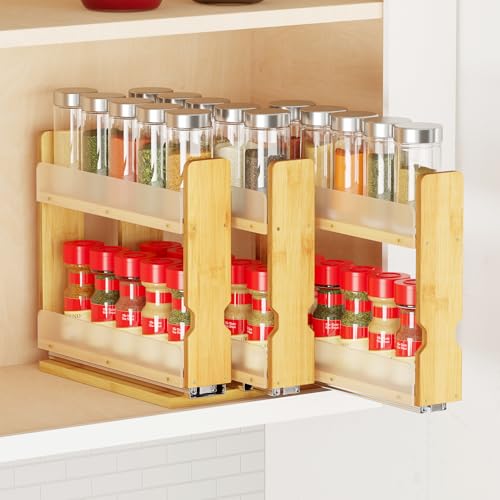
Narrow pull-outs work well for trays or spices when they fill an unavoidable gap. Do not redesign an efficient run simply to add one. Wide drawer bases often offer more flexible storage with fewer moving parts.
Preserve adequate work aisles instead of filling every wall with cabinetry. About 42 inches often supports a one-cook work aisle. A 48-inch aisle gives two people more passing room.
Actual needs depend on appliance handles, door swings, accessibility goals, and local requirements. An open dishwasher or oven can block a narrow aisle. Review every door and drawer in its open position before approving the plan.
Choose Cabinet Designs That Age Well
Cabinets tend to last longer when costly components use restrained shapes and finishes. Hardware, wall color, and backsplash tile can carry shorter-lived trends. Owners can replace those items without discarding the cabinet boxes.
Simple Shaker, slab, and restrained inset doors can support several rounds of updates. Heavily distressed finishes, ornate profiles, and novelty door shapes tend to date faster. Their extra corners also collect grease and complicate refinishing.
Warm white, muted greige, sage, deep navy, white oak, and walnut can all work in a durable design. The right choice should suit the room, available light, and surrounding materials.
Dark paint shows dust, fingerprints, and edge chips more clearly than many mid-tone colors. Bright white can reveal grime, while oil-based clear finishes often yellow with age. Review a real finished sample before ordering.
Hold the sample vertically beside the countertop, floor, backsplash, and hardware. Check it in daylight and under evening lighting.
Questions to Include in a Cabinet Quote
A useful quote lists the materials instead of describing the cabinets as “all wood” or “green.” Ask the supplier to identify box sides, backs, shelves, doors, drawer boxes, and edge treatments. The quote should also name the finish, hinges, and slides.
Request TSCA Title VI documentation for composite panels. If the project specifies FSC-certified wood, ask for chain-of-custody documentation. For lower emissions, request proof of no-added-formaldehyde or ultra-low-emitting-formaldehyde resin.
Ask whether the supplier can provide individual doors, drawer fronts, hinges, and slides later. Confirm how the maker protects the sink base and constructs finished ends. Request touch-up material for future repairs.
A long warranty helps only when the company and hardware system remain serviceable. The strongest bid clearly explains the construction and supports future repairs. A long list of environmental claims cannot replace those details.
Durability Defines Sustainable Cabinetry
Start with the cabinets already in the house. Preserve them when the boxes, layout, and installation remain sound. If replacement makes sense, prioritize documented wood sources, low-emitting panels, repairable doors, and standard hardware.
Spend money on strong boxes, accessible storage, and replaceable parts. Avoid decorative features that make cleaning, repair, or refinishing harder.
Inexpensive stock cabinetry still has a valid place. It may solve an urgent replacement when water damage or structural failure makes reuse impractical. Within that category, choose the strongest box construction and hardware the budget allows.
Keep the layout simple and protect moisture-prone areas. Eco-friendly Cabinet Trends create the most value when they prevent unnecessary cabinet disposal. A cabinet that survives daily use and accepts repairs in 10 or 20 years performs its main environmental job: staying in service.