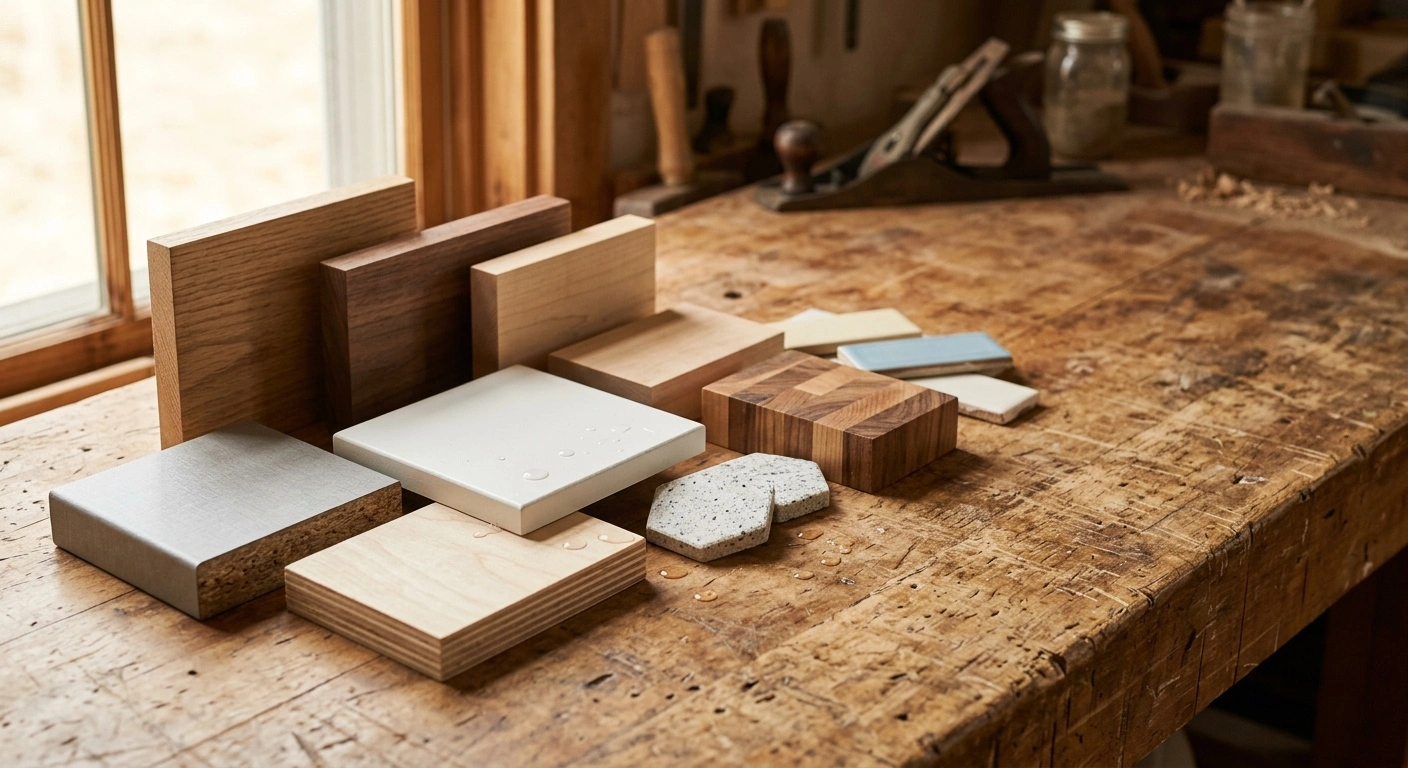
How to Choose the Right Cabinet Material depends on budget, moisture exposure, finish, and daily use. Cabinet boxes and doors often need different materials. Understanding those differences helps you spend money where it matters.
No single material suits every kitchen, bathroom, or storage area. Solid wood offers natural character, while plywood provides stable cabinet boxes. MDF, particleboard, laminate, and thermofoil also serve specific needs.
How to Choose the Right Cabinet Material for Your Project
Start by separating structural needs from appearance. Cabinet boxes support shelves, countertops, hardware, and stored items. Doors and drawer fronts face more handling, grease, sunlight, and cleaning.
Next, consider the room itself. Kitchens need materials that tolerate heat, spills, and frequent wiping. Bathrooms and laundry rooms require stronger moisture resistance.
- For long service life: Choose quality plywood boxes with solid wood or MDF doors.
- For painted cabinets: Consider MDF doors because their smooth surface accepts paint well.
- For a limited budget: Use furniture-grade particleboard with durable laminate or melamine surfaces.
- For humid rooms: Prioritize sealed plywood, moisture-resistant MDF, or metal.
- For natural grain: Select solid wood doors and veneered plywood boxes.
Solid Wood Cabinets
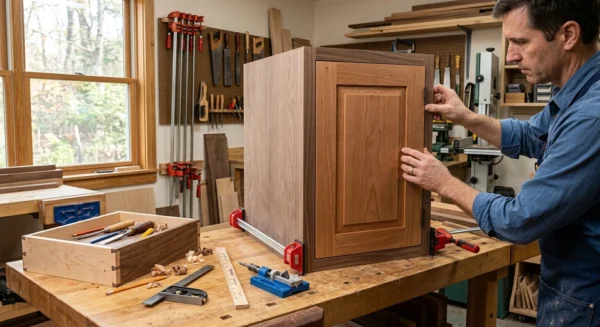
Solid wood gives cabinet doors visible grain, texture, and natural color variation. Common choices include maple, oak, cherry, walnut, birch, and hickory. Each species differs in hardness, grain pattern, and price.
Wood expands and contracts as humidity changes. Skilled cabinetmakers account for that movement through proper door construction and finishing. Even so, wide solid panels may shift more than engineered materials.
Where Solid Wood Works Best
Solid wood suits cabinet doors, face frames, trim, and decorative panels. It rarely makes financial sense for complete cabinet boxes. Veneered plywood creates a stable box while maintaining a wood appearance.
Choose solid wood if you value repairability and natural grain. A craftsperson can often sand and refinish scratched wood. Deep dents and water damage may require more extensive work.
Plywood Cabinet Boxes
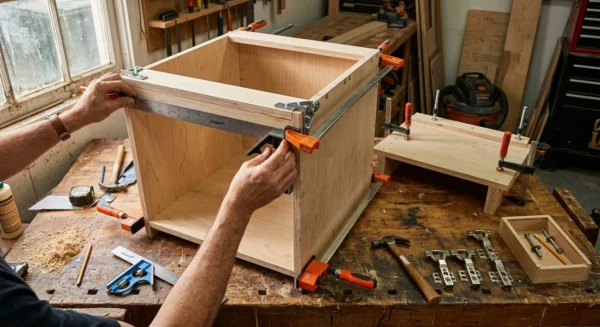
Manufacturers create plywood by bonding thin wood layers with alternating grain directions. This construction gives the panel strength and limits movement. High-quality plywood also holds screws well.
Plywood works well for cabinet sides, bottoms, shelves, and drawer boxes. It usually weighs less than comparable particleboard. However, panel quality varies, so inspect the core and face veneer before buying.
What to Check Before Buying Plywood
Look for flat panels with minimal core gaps. Thin face veneers can chip during installation or sanding. For areas near sinks, choose exterior-grade or moisture-resistant panels with properly sealed edges.
Ask about panel thickness as well. Many cabinet boxes use panels between 1/2 inch and 3/4 inch thick. Wider shelves often need thicker stock or added front supports.
MDF for Painted Cabinet Doors
Medium-density fiberboard, or MDF, contains refined wood fibers bonded under heat and pressure. Its consistent surface produces a smooth painted finish. It also resists the visible grain lines that can appear through painted wood.
MDF machines cleanly, which makes it useful for routed door designs and decorative panels. It remains stable under normal indoor conditions. Yet unsealed edges can absorb water and swell.
Best Uses for MDF
Use MDF for painted doors, drawer fronts, end panels, and trim. Avoid standard MDF around frequent leaks or standing water. Moisture-resistant grades offer better protection, but they still need proper sealing.
MDF weighs more than plywood and may not hold screws as firmly near panel edges. Installers should use suitable fasteners and correct pilot holes. Strong hinges also help support large doors.
Particleboard and Melamine
Particleboard combines wood particles with resin to form flat, economical panels. Cabinet manufacturers often cover it with melamine, laminate, or wood veneer. The finished surface resists stains and cleans easily.
Furniture-grade particleboard can perform well in dry interiors. Its flat surface also supports consistent laminating. However, water can cause lasting swelling if it reaches the unfinished core.
When Particleboard Makes Sense
Particleboard suits budget-conscious projects and lightly used storage. It also works for cabinet interiors with durable factory-applied finishes. Proper hardware installation remains important because repeated stress can loosen screws.
Check panel density and edge quality before choosing a product. Low-density boards tend to crumble near fasteners. Quality construction matters more than the material label alone.
Laminate and Thermofoil Finishes
Laminate consists of a durable decorative surface bonded to a panel core. It offers consistent color, simple cleaning, and good resistance to stains. High-pressure laminate generally handles wear better than thin decorative films.
Thermofoil uses a vinyl layer formed over an MDF door. It creates a smooth surface without visible seams across the face. Heat and moisture can loosen the film over time, especially near ovens and kettles.
Choosing Between Laminate and Thermofoil
Choose laminate for durable slab doors, cabinet interiors, or utility areas. Select thermofoil when you want shaped door profiles at a moderate cost. Always follow appliance clearance requirements to reduce heat damage.
Repairs can prove difficult with either finish. Matching an older color or pattern may also present problems. Ask the supplier about replacement doors before committing to a product line.
Metal Cabinets
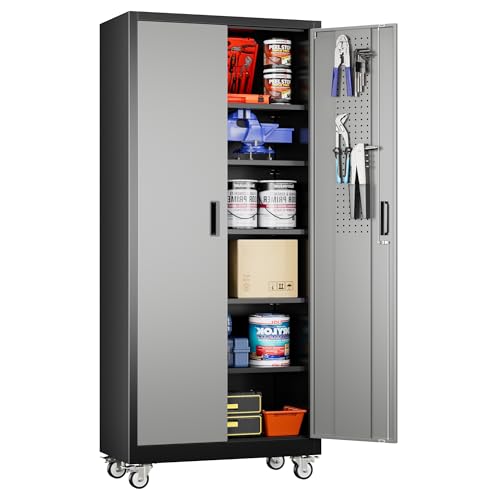
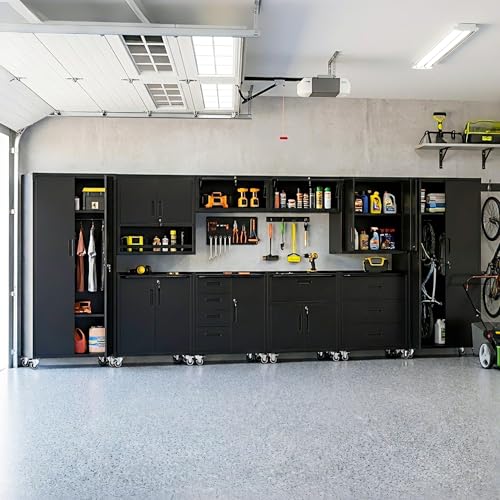
Stainless steel and powder-coated metal cabinets resist heat, stains, and frequent cleaning. Restaurants, workshops, and modern homes often use them. Stainless steel also handles moisture well when installers use suitable hardware.
Metal can show fingerprints, scratches, and dents. It also creates a more industrial appearance than wood-based cabinetry. Powder coating expands the available color choices and reduces visible smudges.
Cabinet Material Comparison
| Material | Best Use | Main Advantage | Main Limitation |
|---|---|---|---|
| Solid wood | Doors, frames, and trim | Natural grain and repairability | Moves with humidity |
| Plywood | Boxes, shelves, and drawers | Strong screw holding | Quality and price vary |
| MDF | Painted doors and panels | Smooth, stable surface | Swells after water exposure |
| Particleboard | Budget cabinet boxes | Low cost and flat surface | Weakens if the core gets wet |
| Laminate | Doors and cabinet interiors | Easy cleaning and consistent color | Difficult to repair |
| Thermofoil | Shaped MDF doors | Uniform finish | Vulnerable to heat damage |
| Metal | Wet, commercial, or utility spaces | Resists heat and stains | Can dent or show fingerprints |
Match the Material to Your Budget
Compare total project costs rather than panel prices alone. Hardware, finishes, installation, edge treatments, and future repairs all affect the final expense. A cheap panel can cost more if it requires early replacement.
Spend more on boxes, drawer slides, and hinges if you use the cabinets daily. You can often replace doors without removing the entire cabinet system. Strong boxes preserve that option for future renovations.
Check Construction Before You Buy
Material choice cannot compensate for weak construction. Inspect joints, shelf supports, drawer bottoms, edge sealing, and hinge mounting. Open every sample door and drawer if you visit a showroom.
Ask the supplier for written specifications. Confirm box thickness, panel grade, finish type, hardware brand, and warranty terms. Clear specifications make quotes easier to compare.
Make a Practical Cabinet Material Choice
Learning how to choose the right cabinet material starts with the room, the finish, and expected wear. Plywood works well for many cabinet boxes, while wood and MDF serve different door styles. Laminate, particleboard, thermofoil, and metal can solve specific budget or maintenance needs.
Focus on sound construction and suitable moisture protection. Then select the appearance that fits your space. That approach produces cabinets that work well and remain serviceable for years.