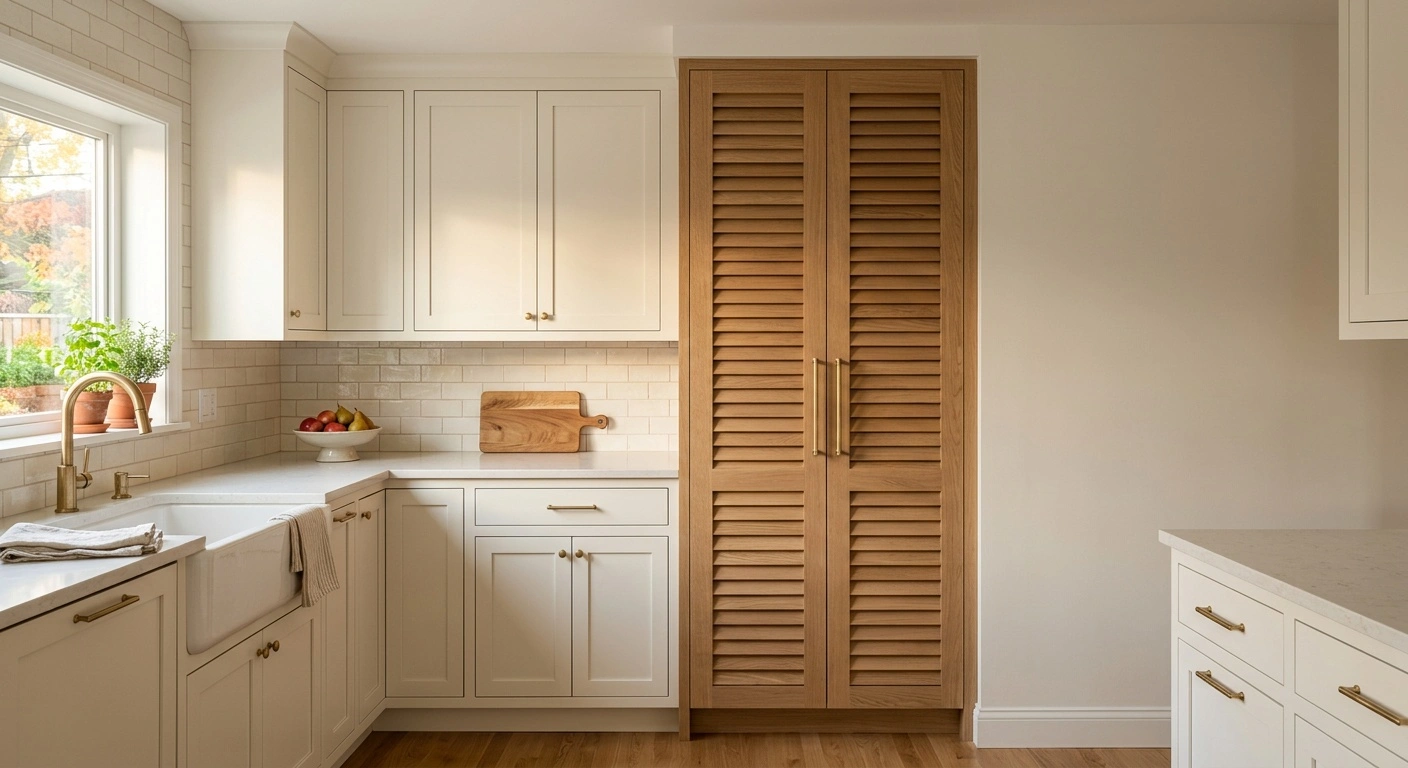
Louvered Cabinets use angled horizontal slats set within a rail-and-stile door frame. The design draws from ventilating shutters and traditional furniture doors. Louvers create strong shadow lines and allow some airflow, adding more texture than Shaker or flat-panel doors.
That character requires extra fabrication. Cabinetmakers must cut every slat consistently, secure it within the frame, and align it with adjoining slats. For 2026 U.S. budgets, allow roughly $150 to $400 for each made-to-order replacement door. This range excludes finishing, hinges, freight, and installation.
Large hardwood doors and complex matching work can cost more. By comparison, an unfinished overlay Shaker door of similar size may cost $60 to $180. These figures serve as broad planning ranges, not national averages. Door size, wood species, finish quality, and local labor rates can change the final quote substantially.
Louvers can look busy and become expensive across an entire kitchen. Instead, use them on a pantry, beverage cabinet, island end, or bathroom storage tower. A limited installation adds detail without making the room feel themed.
How Cabinetmakers Build Louvered Doors
A true louvered door starts with two vertical stiles plus a top and bottom rail. Separate slats fill the center instead of a flat or raised panel. Each slat fits into a routed slot or mortise in the stiles. Cabinetmakers usually set the slats at an angle that conceals contents from normal standing height.
Well-made doors have even spacing and clean shoulders where the slats meet the stiles. They also retain enough material around each slot to resist splitting. Poor construction often produces fuzzy edges, uneven spacing, or rattling slats.
Shops may join the frame with cope-and-stick joints, mortise-and-tenon joinery, dowels, or another proven method. Solid wood expands and contracts as humidity changes. Therefore, broad solid-wood panels in matching doors must float within their frames. The builder should never glue those panels into the grooves.
Individual louvers need secure joinery without thick lines of exposed glue. Tall or wide doors can twist more easily than their sturdy frames suggest. A center rail can divide the slat field, improve rigidity, and reduce movement.
True Louvers Versus Decorative Louvers
True louvers leave open spaces between slats. Decorative or false louvers create the same striped appearance over a solid backing. Open louvers support passive airflow in cabinets that hold linens, electronics, or ventilated hamper bins.
However, a louvered door cannot replace a required appliance vent, bathroom fan, return-air grille, or combustion-air opening. Never use one to justify enclosing gas appliances or heat-producing equipment. Follow all manufacturer instructions, clearance rules, and applicable building codes.
False louvers simplify cleaning because dust and spills cannot pass directly into the cabinet. They also conceal contents better under strong side lighting. True louvers may reveal more than expected when someone views them from an angle.
False louvers provide little or no ventilation. Applied strips can also look heavy if the manufacturer makes them too thick. Before ordering, ask whether the door has open slats, a solid backing, or a shallow decorative profile. Product photographs may not show the difference clearly.
Overlay, Inset, and Reveal Details
Louvered doors work with full-overlay, partial-overlay, and inset construction. This choice affects both appearance and installation tolerances. A full-overlay door covers most of the cabinet frame and usually offers the simplest installation. Partial overlay exposes more of the face frame, creating a traditional or cottage look.
Inset doors sit flush within the face frame with an even reveal on all four sides. This arrangement puts the joinery and fitting on display. It also costs more because installers must maintain consistent gaps without causing seasonal rubbing.
Horizontal slat lines make a crooked door easy to spot. Careful hinge adjustment and even reveals matter more here than on visually quiet slab fronts. Across a cabinet run, keep slat angles, spacing, rail widths, and hardware positions consistent. Mixing inset and overlay doors within the same group usually looks accidental.
Where Louvered Cabinets Work Best
Louvered Cabinets work best as accents where texture also serves a practical purpose. Suitable locations include pantry sections, dry bars, island ends, appliance garages, and upper cabinets near a range hood. Keep true louvers away from direct heat and grease.
In bathrooms, use them for linen towers outside splash zones. Towels suit ventilated storage better than toiletries that need protection from humidity. In mudrooms, louvers can ventilate shoe cabinets. Choose washable shelves and interior surfaces because dust and dirt will still collect inside.
Louvers compete with heavily figured stone, ornate tile, pronounced wood grain, and elaborate molding. Too many patterns can make the room difficult to read. Pair detailed doors with quieter surrounding materials instead.
Avoid true louvers directly beside a range. Airborne grease will settle on every slat and joint. They also perform poorly below sinks because open slats admit drips, cleaning spray, and moisture.
MDF can produce crisp painted profiles, but water causes permanent swelling. That risk makes MDF louvers a poor choice near sinks, tubs, and wet floors. Solid wood also needs protection, though a sound cabinet finish offers better repair options.
Airflow Has Practical Limits
Open louvers allow passive air exchange, but several factors control the actual airflow. These include slat angle, spacing, cabinet depth, shelf position, and the cabinet back. Air also needs a path to enter or leave the enclosure.
A tightly packed cabinet with a closed back may receive little circulation. If ventilation drives the purchase, ask the cabinetmaker about the door’s approximate open area. Confirm whether shelves or back panels will block air movement.
For electronics, follow the equipment manufacturer’s clearance and ventilation instructions. Do not rely on the door alone. Heat can build inside an enclosure when shelves create separate compartments.
For a clothes hamper, choose a removable bin and leave room for cleaning. Dust and lint will gather at the cabinet bottom. Louvers improve air movement, but they do not make a damp interior maintenance-free.
Styles That Suit Louvered Doors
Louvered doors come from shutters, case furniture, and ventilated built-ins. They suit traditional, cottage, transitional, and restrained coastal rooms. The surrounding finishes determine whether the result feels architectural or themed.
For example, a rift-sawn white oak pantry can work in a modern kitchen. Straight grain, simple hardware, and limited use keep the detail controlled. Bright novelty colors and themed hardware create a much stronger style statement.
Traditional rooms can support narrow slats, visible face frames, crown molding, and small round knobs. Transitional kitchens often suit wider louvers, full-overlay doors, plain moldings, and simple pulls. Contemporary rooms usually need only one louvered feature cabinet.
A full set of louvered upper and lower doors creates many competing horizontal lines. Counters, appliances, and hardware can disappear into the pattern. Restrained placement gives the detail more visual weight.
Paint Colors and Wood Species
Warm white paint keeps louvered doors bright without making them look stark. Benjamin Moore White Dove and Sherwin-Williams Alabaster pair well with creamy quartz, white oak floors, and aged brass. Check undertones against the room’s counters, walls, and lighting before approving a color.
Greige shades such as Benjamin Moore Edgecomb Gray create a quieter architectural effect. They work with limestone-look porcelain, brushed nickel, and medium-brown oak. Sherwin-Williams Evergreen Fog can give a pantry definition beside butcher block or warm white quartz.
Deep navy, including Benjamin Moore Hale Navy, strengthens the shadows between slats. It works best in rooms with ample daylight and simpler surrounding cabinets. Dark paint shows pale dust, while glossy finishes reveal fingerprints and cleaning streaks.
A satin or low-sheen cabinet enamel usually hides wear better than high gloss. Choose a coating rated for cabinetry or trim rather than walls. Waterborne cabinet finishes generally resist yellowing better than traditional oil-based alkyd coatings. Oil-based white finishes tend to amber as they age.
Natural Wood Options
White oak works well because its straight grain complements the repeated horizontal lines. Rift-sawn boards create the most orderly appearance. Plain-sawn oak adds cathedral grain, which can make a large installation look busier.
Walnut creates a darker, more formal accent. It pairs well with warm white cabinetry, pale quartz, and brushed brass. Maple offers quieter grain, but it may absorb dark stain unevenly. A clear or professionally toned finish often gives maple more consistent color.
Cherry darkens naturally with light exposure. Areas behind hardware or adjoining trim may age at different rates. Clear finishes can also warm or amber the wood, depending on their chemistry.
A sprayed waterborne clear coat usually keeps pale wood closer to its original color than oil-based varnish. Always approve a finished sample in the selected species. A small stain chip cannot show how color will collect around numerous slat joints.
Counters, Floors, and Hardware
Louvered doors already create a strong pattern, so restrained counters usually work best. Consider soft white quartz, lightly veined quartzite, honed black granite, or straight-grained butcher block. These surfaces let the cabinetry remain the primary detail.
Book-matched stone can work on an island, but it may compete with louvers across every door. Floors also benefit from controlled patterns. Medium-width oak boards, limestone-look porcelain, and simple checkerboard tile provide clear visual structure.
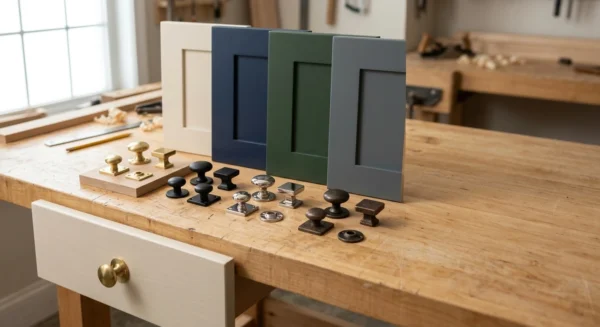
Choose hardware with a clean silhouette and use it consistently. Small brass knobs suit traditional inset doors. Brushed nickel or matte black bar pulls can give full-overlay doors a more modern appearance.
Mount pulls through a solid stile rather than a thin slat. A drilled slat may split and may not hold the fastener securely. Before ordering, confirm the stile width and hardware base size. Also verify that the screw will clear the louver joinery.
Cleaning and Long-Term Maintenance
Louvered doors need more cleaning than slab or Shaker fronts. Every slat has an upper edge that collects dust and grease. For routine care, work from the top downward with a dry microfiber duster or vacuum brush.
Next, wipe the surface with a microfiber cloth lightly dampened with warm water and mild dish soap. Dry the door instead of leaving water in the corners. A soft natural-bristle paintbrush can loosen dust where slats enter the stiles.
Do not saturate painted wood or MDF. Avoid abrasive pads, powdered cleansers, chlorine bleach, and strong degreasers unless the finish manufacturer approves them. Ammonia and solvent-heavy cleaners can dull or soften some coatings.
Furniture polish containing silicone can interfere with future touch-ups. Doors near cooking areas may need gentle cleaning every few weeks. A dry linen cabinet may need dusting only every few months. Check hinges and mounting screws at least once a year.
Chips, Yellowing, and Refinishing
Paint often chips at slat ends, door edges, and knob areas. Clean and lightly degloss small damaged spots before applying touch-up paint. Broad peeling usually points to poor preparation or an incompatible primer.
Waterborne and latex coatings may feel dry long before they fully cure. Some finishes require up to 30 days. Handle newly painted doors gently and avoid aggressive cleaning during the stated curing period.
Before sanding or stripping old doors, determine the coating’s age. Homes built before 1978 may contain lead paint. Testing prevents sanding, scraping, or heat stripping from spreading hazardous lead dust.
Paid contractors must follow the EPA Renovation, Repair and Painting rule where it applies. Use ventilation and an N95 respirator for sanding dust. An N95 does not protect against solvent fumes.
Solvent finishes and chemical strippers require an appropriate organic vapor cartridge respirator. Select and fit it according to the product instructions. Consumer sales of methylene chloride paint strippers are banned in the United States. Choose a non-methylene-chloride product and follow its label.
Oil-soaked rags can self-heat and ignite. This risk applies to linseed oil, tung oil, Danish oil, and similar finishes. Spread rags flat outdoors to dry away from buildings and combustible materials.
Alternatively, submerge the rags in water inside a sealed metal container. Then follow local disposal rules. Never pile wet oil-soaked rags in a bin or enclosed workspace.
Refinishing fixed louvers takes time because finish runs collect at each joint. Raking light also reveals missed sanding scratches. Professional shop refinishing often makes sense when doors need stripping, contain loose slats, or have lead paint.
How to Specify Louvered Doors
First, decide whether the louvers need to provide airflow or only a decorative pattern. Specify open or backed construction, wood species, finish type, slat angle, spacing, and frame width. Include the door thickness and any center-rail requirements.
Ask for a sample door or a finished corner sample. It should show the actual slat profile, frame joint, color, and sheen. View the sample at standing height and from both sides. Open louvers may expose cabinet contents from certain angles.
Confirm whether the quote includes finishing, concealed-hinge boring, hinges, freight, and installation. Louvered construction can restrict hinge placement because cup bores and screws need solid stile material. Switching hinge types later may require new doors.
Changing knobs or pulls is usually straightforward when the new hardware uses the same holes. Changing overlay doors to inset doors requires different dimensions, hinges, and cabinet clearances. It is not a simple hardware update.
For a close match, give the cabinet shop an existing door. Photographs and measurements rarely capture sheen, slat angle, edge profiles, or subtle color changes. An actual sample gives the shop better information.
Use Louvered Details With Restraint
The most durable approach gives louvered doors one clear role in the room. A pantry pair, ventilated bathroom tower, or furniture-style island cabinet can provide enough texture. Surrounding Shaker or slab fronts keep the composition calm.
Limit the finish palette and repeat the same hardware. Every louvered door in a group should share the same spacing, angle, and frame proportions. Consistent details make custom work look intentional.
Choose true louvers when passive airflow offers a practical benefit. Choose decorative louvers when easier cleaning and complete concealment matter more. In either case, pay for straight frames, accurate joinery, and a properly cured finish.
Avoid wet zones, grease-prone locations, and enclosures that require engineered or code-compliant ventilation. Used selectively, Louvered Cabinets add architectural texture without turning routine cleaning into a whole-kitchen project.