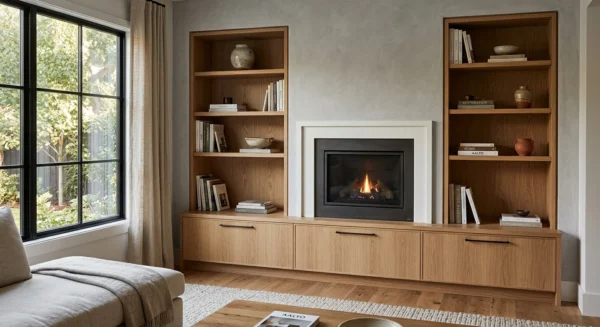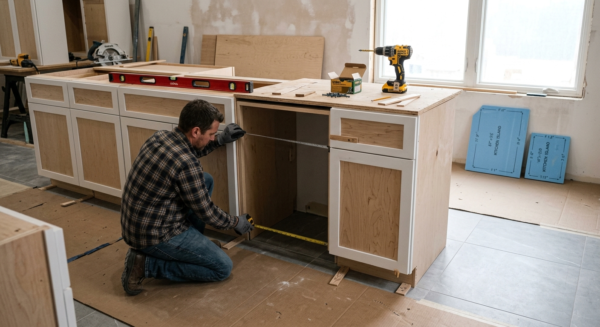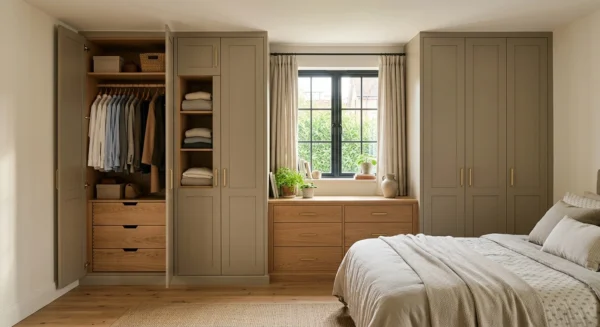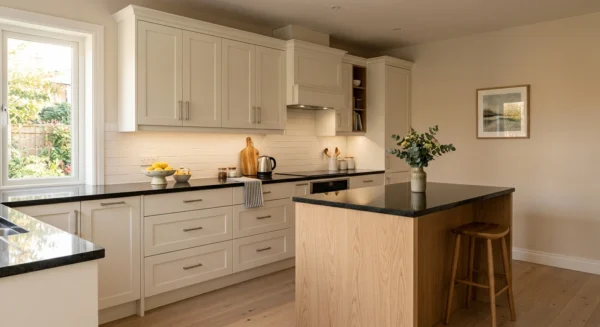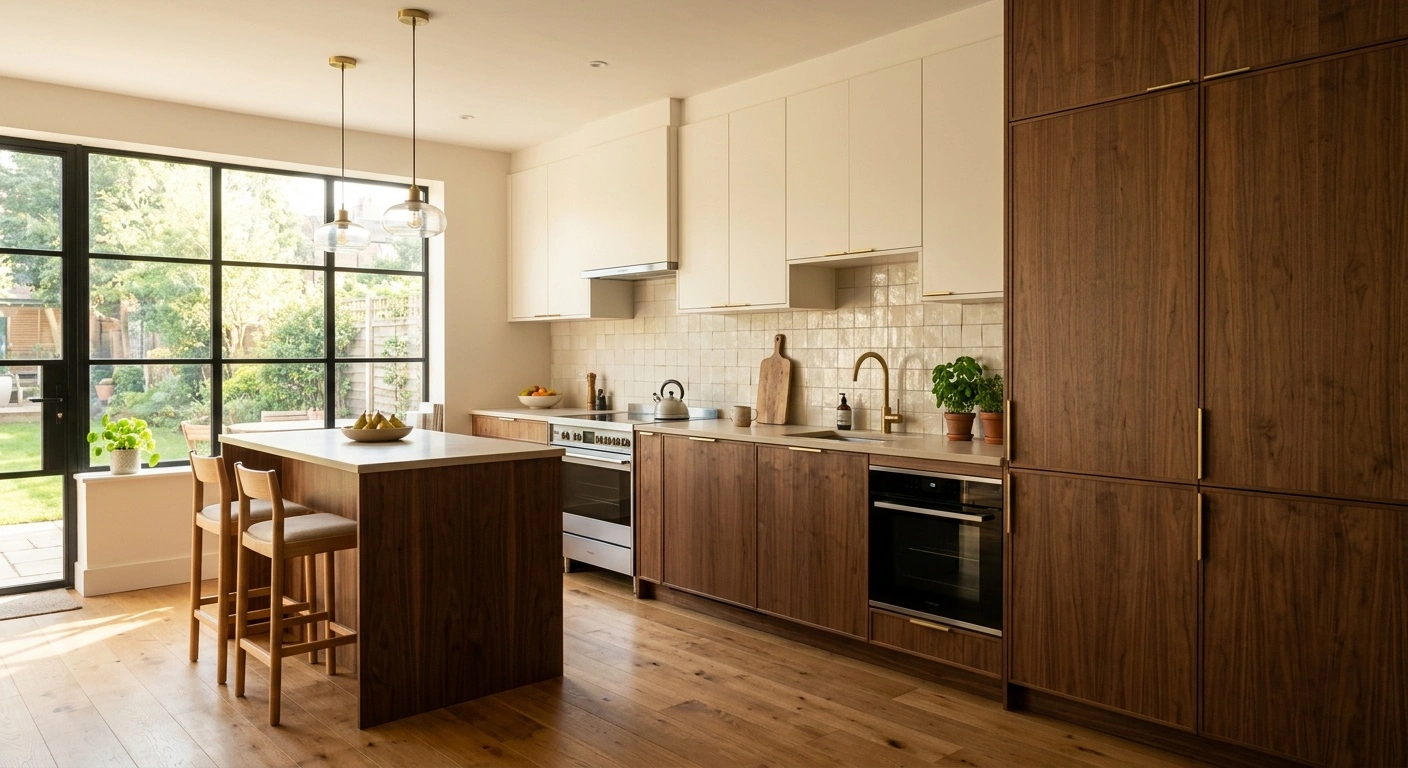
Flat Panel Cabinets use smooth door and drawer fronts to create clean lines with little visual interruption. Cabinetmakers usually call this design a slab door because each front looks like one flat piece. A Shaker door differs because rails and stiles surround its recessed center panel. Manufacturers finish slab doors with paint, wood veneer, laminate, or thermofoil, and each material performs differently.
Slab cabinetry often appears in modern European and midcentury interiors. It also pairs well with frameless construction, which provides broad cabinet access and narrow gaps between doors. However, the style does not have to feel stark. Walnut veneer, warm white paint, and brushed brass hardware can produce a comfortable, welcoming kitchen.
Prices range from affordable laminate fronts to costly sequence-matched veneer work. The smooth surfaces simplify cleaning, but they also reveal fingerprints, chipped edges, poor alignment, and uneven grain.
What Flat Panel Cabinets Look Like and Cost
A true slab door has no raised molding, recessed field, applied trim, or routed face profile. In a frameless kitchen, doors cover the front edges of the cabinet boxes. Narrow, consistent reveals separate adjoining doors and drawers.
Face-frame cabinets can also support slab doors in full-overlay, partial-overlay, or inset configurations. Full overlay usually creates the cleanest modern appearance. Overlay doors sit in front of the cabinet, while inset doors fit flush within the face frame. Installers must fit inset fronts carefully and may need to adjust them as humidity changes.
Basic laminate and thermofoil slabs often cost less than five-piece Shaker doors from the same cabinet line. Painted MDF may cost about the same as an entry-level painted Shaker door. The simple shape reduces machining, but smooth paint still requires careful sanding and finishing.
Real wood veneer usually costs more, especially when the grain continues across several doors. Custom inset construction, integrated pulls, high-gloss coatings, and touch-latch hardware also increase the price. “Flat” describes the appearance, not the budget. A stock laminate door and a custom walnut door may look similar in photographs but differ greatly in construction.
Door Construction and Materials
The right construction depends on the finish, door size, and cabinet location. Painted doors need smooth, stable cores. Wood-grain doors need substrates that support the veneer and resist warping.
Edge treatment matters because every side becomes visible when someone opens the door. Exposed substrate can make an otherwise well-built kitchen look unfinished. Large fronts also need suitable hinges and accurate boring. Their uninterrupted surfaces make even minor sagging easy to spot.
Before ordering, ask about the core, edge finish, and door back. Confirm whether the back matches or coordinates with the face. These details reveal more about long-term quality than a “modern” label in a brochure.
Painted MDF Slab Doors
MDF works well for painted slab doors because it has no grain, knots, or joints. Those features cannot show through the coating later. MDF also machines cleanly and accepts primer and paint evenly across its face.
The edges absorb more finish than the broad surfaces. Manufacturers must seal and sand them properly to prevent a fuzzy appearance. MDF also swells permanently after significant water exposure. Repair damaged edges near sinks and dishwashers before moisture reaches the core.
A waterborne cabinet enamel or catalyzed shop coating produces a smoother finish than ordinary wall paint. MDF remains stable under normal indoor humidity. Still, tall or wide doors may require thicker material or added engineering to stay flat. Choose MDF when you want a crisp painted surface rather than visible wood grain.
Veneered Plywood and Composite-Core Doors
Wood veneer provides the warmth of walnut, white oak, maple, or cherry without relying on wide solid boards. Manufacturers bond thin wood sheets to plywood, MDF, particleboard, or another engineered core. Ask the seller to identify that substrate instead of describing the entire door simply as “wood.”
Particleboard and plywood are different materials. Particleboard contains compressed wood particles and resin. Plywood uses cross-laminated wood veneers, which generally hold edge fasteners better. Plywood also handles minor moisture exposure better than ordinary particleboard.
Edgebanding conceals the core. Better cabinet work often uses closely matched real-wood edging instead of a noticeably different plastic strip. Inspect corners for gaps and check whether the edge color matches the face.
Sequence matching continues the grain from one front to the next. Book matching mirrors adjacent veneer leaves. Both layouts raise costs because the cabinetmaker must select, cut, label, and install each piece in order. Ask for a written grain plan when this visual continuity matters.
Laminate and Thermofoil Doors
High-pressure laminate and thermally fused laminate give slab doors consistent color and durable, easy-to-clean faces. Manufacturers usually apply a separate edge band, which creates a fine seam. Inspect that seam on a display door before placing an order.
Laminate performs well in busy kitchens, but repairing a chipped corner invisibly is difficult. It also comes in many matte, textured, and wood-look finishes. Better products avoid repetitive grain patterns that make adjoining doors look artificial.
Thermofoil uses a vinyl film formed over an MDF core. The film usually wraps the face and edges, which reduces visible seams. It offers an affordable, smooth finish but may delaminate near prolonged heat or steam.
Ovens, ranges, toaster ovens, and poorly vented dishwashers pose the greatest risk. Follow appliance clearances and install required heat shields. Those precautions reduce damage, but they cannot make thermofoil heatproof. Neither laminate nor thermofoil accepts refinishing like paint or wood veneer.
Solid Wood Slab Doors
Wide solid wood slabs appear less often than many buyers assume. Solid wood expands and contracts across its grain as humidity changes. A broad door may cup or twist, especially if one face receives more heat or moisture.
Narrow solid wood drawer fronts can perform well. Tall pantry doors generally remain flatter with veneered cores or engineered laminations. If a door uses frame-and-panel construction, the panel must float freely within its grooves. Gluing it in place prevents necessary seasonal movement.
Maple provides a pale color and tight grain. Cherry starts warm and reddish, then darkens with age and light exposure. Walnut offers rich brown tones but often lightens and mellows. White oak has stronger pores and more visible grain than maple.
Buyers seeking a uniform wall of continuous grain should consider selected veneer. Several solid boards rarely match perfectly in color and figure. Veneer gives the cabinetmaker greater control over grain placement.
Reveals, Alignment, and Hardware
Slab cabinetry depends heavily on consistent spacing. Frameless cabinet runs often use gaps near 1/8 inch. However, manufacturers set exact reveals according to door thickness, hinge plates, and cabinet construction.
Gaps should remain parallel from top to bottom. Adjacent drawer fronts should also align across the entire run. Even a slight offset creates a visible step against the neighboring cabinet. Detailed door styles can disguise small errors, but slab fronts cannot.
Concealed European hinges provide side-to-side, height, and depth adjustment. Adjust misaligned hardware before ordering a replacement door. Tall or heavy fronts may need additional hinges. Follow the hinge manufacturer’s weight and height limits.
Long pulls reinforce horizontal or vertical lines. Small knobs interrupt the surface less, but they concentrate wear around one point. Whatever the style, users should grasp the hardware without scraping their fingers against a door edge.
Installers should drill mounting holes with a jig to maintain consistent placement. Edge pulls create a nearly handleless appearance, although their metal profiles may remain visible. Check the display from standing height because showroom photographs often hide this detail.
Push-to-open hardware removes visible handles but collects fingerprints. It can also trigger when users lean against a cabinet. Integrated channels create a cleaner European look, yet they require early planning and may reduce interior space.
Conventional pulls offer the most flexibility. Owners can replace them later if the new hardware uses the same center-to-center spacing. Routed finger pulls and metal channels are more permanent. Changing them often requires new doors or cabinet modifications.
Where Flat Panel Cabinets Work Best
Slab fronts suit rooms where materials, proportions, and layout should carry more visual weight than door profiles. They often help small kitchens feel less cluttered. However, dark finishes can still make a compact room feel enclosed.
In open-plan spaces, a slab cabinet run can resemble built-in furniture rather than traditional cupboards. The style also works on islands, pantry walls, bathroom vanities, media units, and mudroom storage. Its plain surface lets nearby materials take the lead.
Mixed finishes can keep a large installation from feeling monotonous. For example, painted perimeter cabinets can frame a walnut island. Natural white oak base cabinets can also balance warm white uppers. Strongly veined stone, handmade tile, or a prominent hood gains visual space against simple doors.
Slab fronts can conflict with rooms dominated by ornate crowns, turned legs, and detailed moldings. They can still work in an older house, but the transition should look deliberate. Plain square crown molding, finished end panels, and restrained hardware often bridge the styles.
Highly specific treatments tend to date faster than simple materials. Mirror-like white gloss and artificial gray wood grain reflect particular design periods. Matte paint and real oak veneer usually adapt more easily to later updates. Replaceable hardware also offers more flexibility than a fixed handleless system.
Colors, Wood Species, Counters, and Floors
Warm white cabinetry feels softer than brilliant blue-white paint and coordinates with more countertop colors. Benjamin Moore White Dove and Sherwin-Williams Alabaster offer familiar reference points. Still, sample the actual cabinet coating beside the counter because factory finishes may differ from field-applied paint.
Warm white fronts pair well with lightly veined quartz, white oak floors, and brushed nickel or aged brass. Muted sage works with cream quartz, warm gray tile, and natural oak accents. These combinations provide contrast without creating harsh color breaks.
Deep navy can suit an island or lower cabinet run, especially beneath pale counters. However, it reveals dust, cooking film, and chipped corners more readily than middle-value colors. Matte black makes an even stronger statement. Side lighting quickly exposes fingerprints and lint on its surface.
Rift-sawn white oak provides relatively straight, quiet grain. Plain-sawn oak shows more cathedral figure and creates a busier pattern. Specify the cut if you want a consistent appearance across wide cabinet runs.
Walnut brings immediate warmth and complements off-white quartz, soapstone, brushed brass, and medium-toned floors. Maple appears paler and more uniform. Some maple boards absorb stain unevenly, so clear finishes or sprayed toners often produce better results.
Cherry darkens as light reaches it. Rugs, countertop appliances, and hardware may temporarily leave lighter areas behind. These differences usually soften after uncovered wood receives similar exposure.
Clear waterborne coatings preserve the pale appearance of maple and white oak. Oil-based finishes add amber color and continue to yellow over time. Open-grained oak can retain its natural texture or receive grain filler for a smoother finish. Grain filling adds labor and cost.
Matching wood cabinets exactly to a wood floor rarely works well. Both surfaces change color with age, and grain patterns vary. A clear contrast in tone usually looks more intentional than a near match.
Cleaning and Long-Term Maintenance
The lack of grooves makes slab doors faster to wipe than Shaker or raised-panel styles. However, broad uninterrupted surfaces show streaks more clearly. Use a soft microfiber cloth with warm water and a small amount of mild dish soap.
Wipe veneered doors in the direction of the grain. Then dry all surfaces so water cannot collect along edges or seams. Pay particular attention to doors beside sinks and dishwashers.
Avoid abrasive pads, powdered cleaners, and aggressive use of melamine foam. Do not apply strong degreasers unless the cabinet manufacturer approves them. Ammonia, acetone, lacquer thinner, and alkaline cleaners may dull, soften, or discolor cabinet finishes.
Never let water or cleaner pool along the bottom edge of MDF, laminate, or thermofoil doors. Moisture can enter through damaged coatings and open seams. Once the core swells, a simple touch-up will not restore its original shape.
Inspect painted doors every few months around pulls, trash pull-outs, sink cabinets, and dishwasher edges. These high-contact areas usually show wear first. Repair chips promptly to limit moisture and grease penetration.
Small repairs may remain visible on a perfectly flat face. Keep leftover finish or an approved touch-up kit for minor damage. Before making larger repairs, confirm the coating type with the cabinet supplier.
New latex and waterborne coatings may feel dry within hours but need much longer to cure. Some products require up to 30 days. During that period, handle doors gently and avoid hard scrubbing.
Clear-coated veneer usually needs routine wiping and periodic inspection near handles. Do not apply furniture oil unless the finish manufacturer recommends it. Oils can leave residue on sealed surfaces and complicate future repairs.
Laminate tolerates frequent mild cleaning. Thermofoil needs regular checks near ovens, ranges, and dishwashers. Look for bubbles, loose edges, or lifting film before damage spreads.
High-gloss fronts may need cleaning after every touch. Matte finishes hide reflections but can develop shiny patches under hard scrubbing. Adjust hinges as soon as a door begins rubbing. Repeated contact can chip paint, damage edges, or loosen veneer.
Details Worth Paying For
Prioritize stable door cores, clean edge finishes, adjustable hinges, and accurate installation. These details keep long sightlines straight and prevent uneven gaps. Decorative upgrades cannot correct warped doors or poorly installed cabinets.
For wood fronts, request a written grain layout when continuous veneer matters. For painted fronts, inspect edges and hinge bores for roughness, thin paint, and hairline cracks. Display samples should show the same construction as the cabinets in your quote.
Finished end panels should match the doors in color, sheen, and edge treatment. Minimalist designs make mismatched cabinet sides especially noticeable. Confirm these panels in writing because some cabinet lines price them as upgrades.
Appliance panels require accurate sizing and manufacturer-approved ventilation. Refrigerators and dishwashers also need suitable clearances. A panel that restricts airflow can affect appliance performance and may void warranty coverage.
Touch latches, powered openers, and integrated channels can serve specific needs. Still, a concealed soft-close hinge and well-positioned pull often prove more dependable in a busy family kitchen. Test specialty hardware on a full-size display before ordering it for an entire room.
Tall cabinet walls need fillers and scribes near walls, casing, and appliance handles. These pieces allow doors to open fully when surrounding surfaces are not plumb. Do not remove necessary fillers simply to create tighter gaps. A narrow scribe strip works better than a door that strikes the wall.
Choosing Flat Panel Cabinets That Last
Slab cabinetry offers clean lines, simple cleaning, and broad material choices. Properly sealed MDF provides a dependable base for painted doors. For wide wood-grain fronts, veneer over a stable core generally controls movement better than solid lumber.
Laminate delivers practical durability in hard-working kitchens. Thermofoil can suit a tighter budget when installers protect it from excessive heat and steam. Choose solid wood only after considering seasonal movement and door dimensions. Engineered construction is often the more stable option.
Judge samples in the room where the cabinets will stand. View them in daylight and evening light, then hold them vertically. Color and sheen can look different on an upright door than on a showroom table.
Inspect the face, edges, back, core, hinge boring, and finish. Then step away from an assembled display and examine the reveals. Check whether drawer lines remain level and veneer grain follows the promised layout. With slab cabinetry, simple design leaves workmanship in full view.